Cvent Supplier Network

Villa Igiea, a Rocco Forte Hotel

Salita Belmonte 43, Palermo, 意大利, 90142
 |  
場地圖像
視頻

關於我們

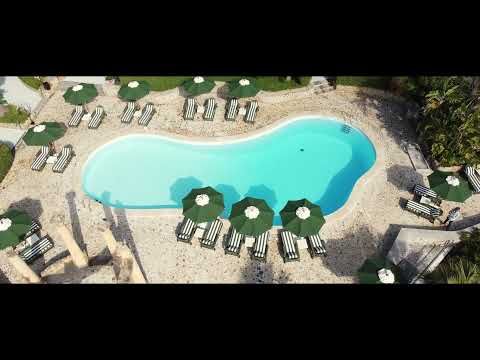
BETWEEN THE CITY AND THE SEA... A timeless turn-of-the-century palazzo, storied Villa Igiea sits amidst enchanting Palermo, lush Mount Pellegrino and the turquoise Tyrrhenian Sea. From here, explore Palermo’s bustling markets, Baroque palaces and ancient sites. Sail Sicily’s picturesque coast. Dine on spectacular Sicilian cuisine. And discover Villa Igiea’s sweeping gardens and palatial Art Nouveau interior, reborn as a Rocco Forte hotel.

場地詳情

連鎖供應商Rocco Forte Hotels
品牌Rocco Forte Hotels
建設1900
裝修2021
會議空間總量8,826 平方尺
客房100
活動場地類型酒店

行業評級

Italia Hotel Classification

獲獎

Industry awards
#1 Best Hotel in Sicily - U.S. News & World Report 2023 25 Best Hotels 2023 # 12 Best Hotel in Europe U.S. News & World Report 2023 25 Best Hotels 2022 Condè Nast Traveler's Gold List 2023 GOLD LIST 2023 #4 Condè Nast Readers Choice Award 2022 Great Design Award 2022 Condè Nast Traveler's 2022 Hot List Travel + Leisure’s 2022 It List - Best New hotels in the World 2022 Connoisseur Circle - Best Heritage Hotel 2022 Robb Report Best of the Best - Travel 2022 Readers' Choice Awards 2022

設施和服務

客房特色和來賓服務
  • 客房服務
  • 景觀 (海洋或水)
  • 景觀 (花園)
  • 洗衣服務
  • 禮賓服務
  • 網際網路
  • 行李寄存
設施
  • 場地內安全
  • 場地內的餐廳
  • 場地內禮品店
  • 場地內餐飲
  • 租車服務
  • 空間 (室外)
娛樂活動
  • 室外游泳池
  • 水療或沙龍
  • 網球場

可持續性

此場地通過了 BeCause 的可持續發展認證,BeCause 是一家與 Cvent 合作的獨立組織。

認證(1)

永續性認證
Ecostars ESG AI
Sustainability level: 1 Ecostar

認證機構:Ecostars

頒發時間: 2025/7/3 到期時間: 2027/7/3

業務需求日期

場地舉辦活動的首選時間段

2026年11月1日 - 2027年3月31日

Seasonal Availability

Do you want to know if your event is during the high or low season? Check the season availability for this hotel.
旺季
6月01日 - 9月21日12月24日 - 12月31日
平季
4月01日 - 5月31日9月22日 - 10月31日
淡季
11月01日 - 12月23日1月01日 - 3月31日

會議室

會議空間總量
8,826.4 平方英尺
最大的房間
3,767.4 平方英尺
會議室
3
第二大房間
3,229.2 平方英尺
空間 (室外)
215,278.3 平方英尺
了解會議室
了解會議室
使用設置圖表和互動式 3D 平面圖找到完美的房間。

會議空間

名稱
房間大小
天花板高度
最大名額
U 形
宴會圓桌
雞尾酒圓桌
劇院式
教室
會議室
新月形 (卡巴萊式)
空心正方形
Belmonte Hall
3,100.0 平方英尺
78.7 x 39.4 平方尺
16.4 英尺
300
60
--
300
120
-
120
-
Belvedere Foyer
1,076.4 平方英尺
-
16.4 英尺---------
Belmonte Foyer
861.1 平方英尺
32.8 x 16.4 平方尺
9.8 英尺---------
Belle Epoque Ballroom
3,767.4 平方英尺
95.1 x 26.2 平方尺
16.4 英尺
280
70
280
280
200
110
70
100
72
Sala Basile
1,410.1 平方英尺
51.5 x 26.9 平方尺
29.2 英尺
120
50
80
80
120
62
42
50
52
Sala Basile Foyer
516.7 平方英尺
26.9 x 19.4 平方尺
15.1 英尺
50
20
30
50
40
20
18
20
-
Igiea Terrazza Bar
1,076.4 平方英尺
32.8 x 16.4 平方尺
9.8 英尺---------
Terrazza Mare
3,229.2 平方英尺
-
----------
Alicetta Pool Bar
1,076.4 平方英尺
-
9.8 英尺---------

客房

客房總數
100
雙人 (2 張床)
100
套房
28
稅率
10%

地點

到達這裡

Distance from airport 18.39 mi
區域內的停車場
免費停車場
街道停車

當地景點

Palermo Airport
Palermo Airport
機場
29公里
Falcone Borsellino Airport (IATA: PMO) or simply Palermo Airport, is located at Punta Raisi, 35 km / 22 mi west northwest of Palermo, the capital city of the Italian island of Sicily. It is the 8th Italian airport with 7.018.087 passengers handled in 2019.
Punta Raisi
Cinisi, IT 90045
造訪網站
Marina Villa Igiea
Marina Villa Igiea
娛樂
2分鐘
Marina Villa Igiea is the yacht harbour of Palermo. Its strategic location, in the heart of the Mediterranean, makes it a reference point for countless routes. Few steps away from down town and only fourty minutes by car from the international airport of Palermo, Marina Villa Igiea offers 400 fully equipped berths for boats up to 75 meters, while a new pier will soon welcome megayachts up to 120 meters LOA. An impressive project of expansion and improvement of services is gradually turning the place into one of the most prestigious and important marinas in the Med. Being part of the scenic district Acquasanta, north of the industrial port, Marina Villa Igiea is sheltered by the mountains surrounding Palermo and by two breakwaters. The famous, luxurious, five stars Grand Hotel Villa Igiea is located just behind the harbour.
orto Acquasanta
Palermo, IT
造訪網站
Central railway Station
6公里
Palermo Centrale station is the main railway station of the city of Palermo. It is located in the heart of the city, in Piazza Giulio Cesare. It is also the station of origin of the line for the Palermo-Falcone Borsellino airport and of the metropolitan railway service.
P.za Giulio Cesare
Palermo, IT 90123
造訪網站
Palatine Chapel
Palatine Chapel
歷史地標
6公里
Located on the first floor of the Norman Palace, the Palatine Chapel was built from 1130 to 1132 under the reign of Roger II as the main chapel of the Royal Palace. In 1132, it was elevated to a Parish Church and dedicated to the Saints Peter and Paul, but over the years the double dedication was forgotten and the parish simply became known as of St. Peter. The fact remains, however, that the right-hand nave is decorated with episodes from the life of St. Paul, and the left-hand one with episodes from the life of St. Peter. The Chapel represents the Norman rulers’ successful condensation of their aspiration to restore the cultural world pertinent to the Christian faith, at the same time drawing from the experience of the Muslim world to create luxurious decorations worthy of the royal power. The chapel is entirely covered with a fascinating golden mosaic decoration created by skilled Byzantine craftsmen, and presents religious iconographic themes with a majestic Christ Pantocrator towering above the chapel, surrounded by angels and archangels. The chapel has three naves separated by ten columns, five on each side, in Egyptian granite. The mosaic pavement follows a design representing continuously repeated identical motifs; the one located at the foot of the dome is particularly interesting and lavish, presenting a geometrical design of obvious Byzantine inspiration. The luxurious ceiling is in Muqarnas style, with Islamic-style paintings: two rows of large eight-pointed star-shaped panels closing out smaller lobed domes with eight curved wedges; the star is composed of two faces, the inner one adorned with geometrical decorations and the outer one with Kufic script, typical of ancient Arabic decorative writing.
Piazza Parlamento
Palermo, IT 90129
造訪網站
The Royal or Norman Palace
歷史地標
8公里
The Norman Palace was built around the 10th Century by the Arab emirs. The Norman kings chose it as a residence and saw it as a fortress but also as an abode with exceptional lavishness and sophistication. For their architecture, they made use of the technical mastery of Muslim workforces, thus generating “Arab-Norman Art”. The building complex which now forms the Royal Palace is the result of additions made between the 16th and 17th centuries, giving it a consistent appearance. Besides the splendid Palatine Chapel, inside the palace one may also admire the Sala d’Ercole (Hercules Hall), built in 1560 and named that way due to the presence of paintings by Giuseppe Velasquez depicting scenes of the mythological hero; the Sala del Duca di Montalto (Duke of Montalto Hall) decorated with frescos by Pietro Novelli, the Sala dei Viceré (Viceroy Hall) where 21 portraits of the kingdom’s viceroys, presidents and lieutenants are on display; the Sala di Re Ruggero (King Roger Hall) where the walls and vaults are covered with mosaics with naturalistic motifs, on a bed of golden tiles; the Sala della Regina (Queen Hall) in Pompeian style and with paintings by Giuseppe Patania, and so on. The Torre Pisana hosts the Astronomical Observatory since 1791. Since 1946, the Norman Palace hosts the Sicilian Region Assembly and is the meeting point of the Sicilian Parliament, which glories in being the most ancient in Europe, having been formed by King Roger in 1140.
Piazza Parlamento
Palermp, IT 90129
造訪網站
The Cathedral
The Cathedral
歷史地標
6公里
The Cathedral is considered to be “History Book of Palermo”, because all dominations which have taken control over the centuries have left traces of their presence: the construction dates back to 1184. The southern façade (the one facing Via Vittorio Emanuele) is particularly evocative, with its magnificent portico, completed in 1453, representing a masterpiece of Catalan Gothic (the so-called gotico fiorito) and with a marble balustrade surrounding the Cathedral’s main area, added by Vincenzo Gagini in 1574 and later decorated with statues of Sicilian male and female saints. The wide inside area was radically transformed between 1781 and 1801, giving the baroque concept of space a correct neoclassical proportion, where the dome is the fundamental element of balance. The royal tombs in red porphyry are of remarkable interest, the one of Frederick II in particular, as well as the chapel with the silver urn of St. Rosalia, patron saint of Palermo, which is carried in procession on every 15th of July, the holy water font made by Domenico Gagini in the 15th Century with a shell-shaped basin and reliefs representing the Baptism of Jesus and the Annunciation; the 1794 High Altar in semi-precious stones and fine woods, and the treasure, filled with sacred vestments, calyxes, breviaries, ostensories and more, mostly dating back to the 16th, 17th, and 18th centuries. One object which is definitely of great interest is the tiara of Constance of Aragon, which was found in her sepulchre.
Corso Vittorio Emanuele
Palermo, IT 90134
造訪網站
The Church of St. John of the Hermits
歷史地標
7公里
The church of St. John of the Hermits (San Giovanni degli Eremiti), one of the most distinguished medieval buildings of Palermo and one of most symbolic monuments of the city, was built in the Norman age, from 1130 to 1148, under the reign of Roger II, and later underwent a radical restoration by Giuseppe Patricolo, in 1882. The inner structural module of the church is given by a cubic structure covered by a dome. This module is repeated five times: twice in the aisle of the single nave, and three times in the transept. The juxtaposition of the square, which represents the earth, with the circle, which represents the sky, is recurrent in Fatimid Islamic culture as well as in Byzantine culture. The interior is bare and collected. The central nave is divided horizontally by a firm pointed arch which is identical to the one on the front end of the transept. The latter has three semi-circular apses, of which only the middle one is pronounced on the outer side beyond structure of the wall. The Cloister, of uncertain dating, possibly from the 18th Century, is attached to the church. The cloister is rectangular, with pointed arches disposed on twin columns.
Via Dei Benedettini
Palermo 90134
造訪網站
The Church of St. Mary of the Admiral (also known as Martorana)
歷史地標
5公里
The Church of Santa Maria dell’Ammiraglio (St. Mary of the Admiral) was built in 1143 by George of Antioch, Admiral of King Roger II. In the 15th Century it was given to the nearby convent of Benedictine nuns, founded in 1994 by Goffredo and Eloisa Martorana; since then, the church has also been known as “Martorana”. The building is composed by the sanctuary, which maintains its original square structure with its dome supported by four large pointed arches, typical of the Arab-Norman style, and by baroque naves, added at the end of the 17th Century covering the entrance atrium, as the church was initially introduced by an open courtyard with a bell tower, which was then elevated in the 14th Century, and which in the 16th Century became the church’s main entrance. The wide interior has three naves with a choir at the entrance supported by columns coming from previous Norman buildings. The Byzantine mosaics covering part of the interior are of significant interest, as well as the 17th Century frescos on the sub-choir, by Olivio Sozzi and Guglielmo Borremans. The deep-set quadrangular presbytery, dating back to 1685, is decorated with multicoloured inlaid marble; the altar has a precious lapis lazuli tabernacle from the end of the 17th Century, and above there is the Raphaelite-style “Ascension”, painted in 1533 by Vincenzo da Pavia. The church belongs to the Eparchy of Piana degli Albanesi, a Greco-Byzantine rite Catholic diocese belonging to the Sicilian Byzantine Church. Restoration works have recently been completed.
Piazza Bellini, 3
Palermo, IT 90133
造訪網站
The Capuchin Catacombs
歷史地標
7公里
The Capuchin Catacombs are located in the basement of the Capuchin Fathers ever since 1599, the year of their completion; the galleries that compose them form a large rectangular cemetery. From 1601 onwards, due to the large amount of corpses arriving here and above all due to the many requests of noblepersons who requested and obtained to be buried there, the friars were forced to expand the burial grounds. About 8000 embalmed corpses are conserved here, divided by sex, social category, and profession: the first person to have been buried within the catacombs was Brother Silvestro da Gubbio, on October 16th 1599; the most recent burial dates back to 1920 and is the one of Rosalia Lombardo, a two-year-old girl placed inside a crystal coffin, which has become a symbol of the catacombs. What strikes visitors the most is the method used by the friars for the preservation of the corpses: they would be taken into a room and laid on a lattice made with terracotta tubes, and once the doors had been closed hermetically, they would remain there for a period of about eight months or a year. After this, they would be taken to a ventilated place covered with roofing, where they would be washed and cleaned using water and vinegar, and then redressed and placed in wooden boxes or niches along the corridors; they would remain there only if their relatives would visit them and bring them wax for three consecutive years, otherwise they would be removed.
Via Cappuccini,1
Palermo, IT 90129
造訪網站
Oratory of St Cita
Oratory of St Cita
歷史地標
4公里
Built in 1590 by the Compagnia del Rosario, which formed in 1570. From the upper loggia, adorned with marble busts, one goes through a stone portal to the room that serves as a vestibule; this is adorned with portraits of the Seniors of the Company. The simple rectangular hall with a small tribune was decorated by the masterful hand of Giacomo Serpotta, who worked there from 1687 to 1718. The two entrance doors have doorways supported by couples of atlases; in the upper part of the entrance wall, six reliefs of great prospective force are inserted between draperies, volutes, vegetal elements, and putti; among the reliefs, the scene of the "Battle of Lepanto" stands out, placed in the centre and painted with great wealth of details. But the entire wall surface participates in the sculptural decoration intensely, rendered with vivid effects of decorative realism, and the whole takes part in a Baroque explosion that finds its climax here: the windows display a plastic architecture; on the gables, on the shelves, and on the draperies there are putti and statues; naturalistic elements and festoons merge into a harmonious whole. Under each window there are sculptural paintings with the "Mysteries of the Rosary". Against the walls there are the seats of the confreres in inlaid wood, and the floor is in polychrome marble with drawings. Over the altar is the canvas of the "Madonna of the Rosary" by Carlo Maratta of 1695; on the sides are two XVIII century choirs. Beyond the oratory hall, on the same floor, are the rooms of the rectory and the small chapel of the Crucifix, known as "Oratorio sopra S. Cita", where in the early years of the XVIII century Filippo Tancredi painted the "Adoration of the Mystic Lamb" in the vault.
Via Valverde, 3
Palermo, IT 90133
造訪網站
Branciforte Palace
Branciforte Palace
博物館
4公里
Built at the end of the sixteenth century by the Branciforte and Lanza family, who expanded it in the first half of the seventeenth century, to the point of being considered one of the most sumptuous residences in the city. In the XVIII century it passed to the Branciforte di Butera family, who, in 1801, ceded it to the Palermo Senate to make it the new site of the "Monte dei Pegni", which in homage to the Patron Saint of Palermo, was named "Monte di Santa Rosalia". In 2005 it was acquired by the Banco di Sicilia Foundation. In May 2012, the Palace, completely restored to its original splendour thanks to the project by the architect Gae Aulenti, was reopened to the public as a new, important cultural centre composed of the Museum, where interesting collections of archaeology, majolica, philately, numismatics, and sculpture are kept; of a historic Library that holds about 50 thousand of the Foundation’s books; of the rooms that were part of the Monte di Santa Rosalia, which represents a rare example of still existing wooden architectural composition, now destined to host temporary art exhibitions; of the Città del Gusto, or the famous Gambero Rosso cooking school; of the Branciforte Restaurant; of the Auditorium, that can host conferences and cultural events; and of the Emporio Branciforte, which offers a selection of editorial products and objects related to art, food, and wine. Recently, the Banco di Sicilia Foundation has acquired the Collection of Sicilian Puppets of the historical Cuticchio family, consisting of 109 puppets from the Palermo school, 39 theatrical scenes, 9 billboards and 2 cylindrical surfaces.
Via Bara All'Olivella, 2
Palermo, IT 90133
造訪網站
Eagles or Praetorian Palace
歷史地標
5公里
The most representative civil building of the city, being the location of the Municipality of Palermo, was built in 1470 by the architect Giacomo Bonfante at the behest of the magistrate Pietro Speciale. Over the centuries it underwent innumerable transformations, among the most important are those that took place in 1553, when the main entrance was moved from Piazza Bellini to Piazza Pretoria, and the one that took place between 1874 and 1891 thanks to the architect Giuseppe Damiani Almeyda, who gave the palace its current shape. On the main façade, inside a niche, there is a statue of the patron saint of Palermo, S. Rosalia, sculpted by Carlo D'Aprile in 1661; on the crownwork, on the façade, and also inside there are numerous eagles of different types, hence the name "Palazzo delle Aquile": the eagle is the symbol of the city, and is a legacy of the Roman era, with the symbolic value of "power". Within, one may visit the Red Room, which is the Mayor's office; the Yellow Room, where the City Council meets; the Sala delle Lapidi, so called because of the numerous tombstones that cover its walls and which bear witness to important facts and events linked to the history of the city, this is where the City Council meets.
Piazza Pretoria, 1
Palermo, IT 90133
造訪網站
The Praetorian Fountain
歷史地標
5公里
The Praetorian Fountain was created in 1554 by the Tuscan sculptor Francesco Camilliani as a decoration for a Florentine villa. It was subsequently purchased by the Palermo Senate for 20 or 30.000 scudi, and reached Palermo in 644 pieces and then reconstructed differently from the original design. The fountain has an elliptical structure with concentric basins arranged on three levels; stairs and statues alternate according to a classical, symmetrical pattern. The fountain, planned for a space which was different from its current location, was adapted by Camillo Camilliani, son of Francesco. The four basins of the first level, with statuary groups of lying figures, represent Palermo’s rivers: Oreto, Papireto, Gabriele, and Maredolce; the faces of the Genius of Palermo, St. Rosalia, and the Praetorian Eagle are all depicted in the fencing. A rich sculptural repertoire is representing mythological deities, monsters, animals, dolphins, harpies, and mermaids. The open nakedness of the figures displayed did not fail to upset the minds of citizens, who renamed this site “Piazza della Vergogna” (“Square of Shame”). The gate, designed by Giovan Battista Filippo Basile, was placed here in 1858.
Piazza Pretoria,1
Palermo, IT 90133
造訪網站
The Gangi Valguarnera Palace
歷史地標
5公里
The Gangi Valguarnera Palace was built in the first half of the 17th Century and finished around 1780 by prince Pietro di Valguarnera. Due to the vastness of its architectural layout, the quality and richness of the decorations, and the fact of it having arrived to the 21st century practically intact, palazzo Valguarnera is not only a unicum in the Sicilian scene, but also one of the highest moments of Italian Rococo. Within, one may admire: the Hall of Honour, with its ceiling painted by Elia Interguglielmi in 1792 showing the “Glory of the virtuous prince”; the Gallery of mirrors, with its double ceiling, allowing the large central fresco to be seen through the openings in the lower false ceiling; the Yellow Hall with the “Triumph of the virtues necessary to the prince” fresco, painted by Gaspare Serenario in 1754. The palace inspired director Luchino Visconti for the setting of the famous scene of the great dance in his film Il Gattopardo, from the novel by Giuseppe Tomasi di Lampedusa.
Piazza Croce dei Vespri, 6
Palermo, IT 90133
造訪網站
The Chiaramonte or Steri Palace
歷史地標
4公里
The Chiaramonte or Steri Palace was built around 1320 by Manfredi I and belonging to the Chiaramonte family, who were one of the most renowned families, to the point of exerting great political and military influence over much of Western Sicily, it is now the main office of the Rectorate of the University of Palermo. The Palace has a square layout centred around a courtyard portico with two orders: the first is more solid, with pointed arches supported by stocky columns, while the second is loftier, with arches resting on slender columns, distributed on three floors. All the spaces get their light from mullioned windows located on the façades, except for the northern hall which has two series of elegant three-mullioned windows on its two longer sides, and overlooks the internal courtyard. The openings are set on slender columns, some of which are spiralled, and end with small arches decorated with two-coloured bands or archivolts with rods in a zig-zag disposition; a large frame with pointed arches encloses the windows with delicate interwoven geometric motifs. In the three-mullioned windows, three circular decorations within the lunette form a further decorative motif. The windows on the second floor are simpler and have less attention to detail. On the first floor the Sala Magna, the Rector’s representation hall, can be admired, decorated with a precious wooden ceiling painted with scenes showing knightly adventures from 1377 and, on the second floor, the Sala delle Capriate, which is used for conferences and important cultural events. Over the centuries the Palace changed its use several times: it was the residence of the Spanish Viceroys, it housed the Offices of the Customs, it was the headquarters of the Court of the Holy Inquisition with connected Prisons of Penance, it became a shelter for the poor, and had the judicial offices placed within. Connected to the Steri is the small church of S. Antonio Abate, in 1300s Gothic style.
Piazza Marina, 61
Palermo, IT 90133
造訪網站
Butera Palace
Butera Palace
歷史地標
5公里
Princely abode of the Branciforte, princes of Butera, of the Scordia family. The original nucleus of the palace originates in the XVII century, but starting from 1721, when it became the residence of the Branciforte, a new definition was given to the building and, with successive expansions, the building reached a front size of about 120 meters. After the fire of 1759, the building was totally redone and sumptuously enriched by a crowd of decorators, plasterers, potters and interior decorators. Of considerable interest are the vault frescoed by Gioacchino Martorana, with a false balcony and a tromp l'oeil dome, and the frescoes in the five rooms of the noble floor, by the same artist, depicting pastoral scenes within frames with an architectural design. Other smaller salons have more recent decorations, probably attributable to Elia Interguglielmi. In the richly decorated halls there are gilded doors, painted overdoors, furniture, upholstery, and quality stucco and ceramic decorations. In 2016, the building was purchased by Massimo and Francesca Valsecchi, who financed a complete restoration of the structure with the intention of creating a museum that will house the works of art of their splendid collection. The collected works represent the peak of the artistic production of different historical periods and of various cultures. From 17 June 2018, some areas of the palace have been opened to the public.
Via Butera, 8
Palermo, IT 90133
造訪網站
The Massimo Theatre
The Massimo Theatre
劇院
5公里
For this theatre, an area was chosen between the ancient centre of the city and the new northern expansion, as if to certify the historical continuity between the two areas. The theatre found its place among the ancient neighbourhoods through radical demolitions which involved, in addition to stretches of the city walls, the Aragonese district, to the west, and the monastic complexes of St. Giuliano and of Stimmate. The winning project of the call for tenders, announced in 1864, was that of Giovan Battista Filippo Basile. The Teatro Massimo Vittorio Emanuele covers an area of 7.730 square metres, and is estimated to be the third largest theatre in Europe, after the Opéra National de Paris and the Wiener Staatsoper, also regarding its capacity and technical requirements. The entrance is characterised by a hexastyle colonnade on a monumental staircase; on the borders of the stairs are two bronze works representing Tragedy, by Benedetto Civiletti, and the Opera, by Mario Rutelli. The theatre is a two-storey building which is arranged around the main hall, behind which the stage develops; two circular vestibules protrude laterally. The hall, covered by a dome, and the stage, with a pitched roof, rise displaying their formal autonomy in relation to the context of the building. The monumentality of the architectural concept was assured by the choice of the classic "Corinthian-Italic" style. The theatre was completed in over twenty years, from 1875 to 1897; when the original architect died, in 1891, works were completed by his son, Ernesto Basile, who was responsible for the external definition and directed the internal finishing works. These include the furnishings of the vast entrance vestibule, where a bust of Vincenzo Bellini is placed, the magnificent display of the royal box, the hall, and the five tiers of dais. The hall’s vault was frescoed by Ettore De Maria Bergler and Rocco Lentini. In 1997 it was reopened after a long period of abandonment, which had begun in 1974 due to procrastinated restoration. In 1990, the theatre was the setting for some scenes of the film The Godfather - Part III by Francis Ford Coppola, with Al Pacino, in which the Godfather Michael Corleone went to Palermo to attend his son's debut in Pietro Mascagni's Cavalleria Rusticana.
Piazza Giuseppe Verdi
Palermo, IT 90138
造訪網站
The Politeama Garibaldi Theatre
劇院
4公里
The theatre was built between 1867 and 1874 with a design by Giuseppe Damiani Almeyda, in Pompeian style with a double order of external colonnaded ambulatories and a façade designed as a triumphal arch; on this stands a bronze chariot, by Mario Rutelli. The theatre was designed as a daytime arena and for circus shows; the roof was only made in cast iron by the Oretea Foundry in 1877.In 1890, in view of the National Exposition that was to take place the following year, the theatre was decorated with paintings of Pompeian taste: it was entrusted to the decorators Gustavo Mancinelli, to whom we owe the frieze of the Eleutherian Feasts that surround the fake blue-sky velarium, Giuseppe Enea, Rocco Lentini, Giuseppe Cavallaro, Carmelo Giarrizzo, Francesco Padovano, and Giovanni Nicolini. The vestibule offers a coffered ceiling adorned with reliefs and friezes, while the walkway and rest areas, such as the large hall of mirrors and the upper floors where the Civic Gallery of Modern Art was formerly located, are all decorated with paintings by Giuseppe Enea, Rocco Lentini and Giuseppe Cavallaro. Furthermore, Damiani is also the designer of the two majestic external chandeliers, and oversaw the placement of the Monument to Ruggero Settimo (Benedetto De Lisi, 1865) in front of the theatre.In the gardens on either side of the two semicircles of the majestic building’s façade, which occupies about 5000 square meters, one may admire sculptures by Valerio Villareale (Bacchante), Benedetto De Lisi (Sylph), and Antonio Ugo (David). The horseshoe-shaped hall has two tiers of dais, a balcony, and two rows of galleries. In the entrance hall is the "Dancer", an all-round sculpture by Amedeo Cataldi.In June 1874 the theatre was inaugurated, despite being incomplete and still lacking a roof, with the performance of I Capuleti e i Montecchi by Vincenzo Bellini, considered, for its time, a work of great engineering.
Piazza Ruggero Settimo, 15
Palermo, IT 90139
造訪網站
Villino Florio
Villino Florio
歷史地標
6公里
A splendid example of Liberty Style architecture. It was built, at the behest of the powerful Florio family, between 1899 and 1902 by the architect Ernesto Basile, who decided to dedicate its construction to his wife, Ida. This is one of the first architectural works in Italian Liberty style, and is considered one of the masterpieces of Art Nouveau on a European level. Considering Vincenzo Florio’s cosmopolitan and great traveller attitude, Basile decided to recreate, through the various elements of the building, all the stages reached by the rich bourgeois: baroque surfaces, typically Nordic trusses, cylindrical turrets that refer to French castles, etc. When the family's thriving period ended, the villa fell into disuse until the fire of 1962 which damaged part of the interior. Finally, after a long period of restoration, Villino Florio is open to visitors.
Viale Regina Margherita, 38
Palermo, IT 90138
造訪網站
The Palace of Zisa
The Palace of Zisa
歷史地標
6公里
The palace started to be built during the reign of William I and was completed by William II around the year 1167. It was the favourite summer residence of the king and his court. Its name comes from the Arab term “al-Aziz”, meaning “splendid”. It has undergone a number of transformations over the centuries, of which the most considerable was certainly the one performed in 1635, when baroque additions were made by Giovanni Sandoval. On the outside, it presents itself as a crystalline block divided into three horizontal orders, which correspond to the three floors. The main façade opens onto a vestibule known as the “Sala della fontana” (Fountain Hall), surrounded by the apartments in the southern and northern wings, and with decorations that have a typically Islamic style, with a quadrangular three-lobed base supported by pairs of columns; instead, a baroque fresco known as the “devils of the Zisa” has been placed on the entrance arch, a series of figures which according to popular tradition is impossible to count due to their circular disposition. The pavement of the hallis crossed by a small spillway channel which forms two basins, square on the outside and octagonal on the inside, where the water coming from the fountain located on the hind wall would flow. The hall is entirely covered with marble, with a mosaic section above depicting naturalistic motifs, with round shapes on the fountain wall. The ventilation system is of particular interest, as it is formed by funnels which allowed relief from the summer heat. The castle hosts the Museum of Islamic Art, with exhibits from the entire Mediterranean area.
Piazza Guglielmo il Buono
Palermo, IT 90135
造訪網站
Golf Club Palermo Parco Airoldi
娛樂
3公里
In the heart of the city of Palermo, in an 18th century park, among fountains, monuments and trees of historical interest, Golf Club Palermo Parco Airoldi. extends for about 140,000 square meters. The Golf Club has a 9-hole course, a PAR 32 course of great charm and easy to use, valid for holding official competitions and HCP management.
Piazza Leoni, 9
Palermo, IT 90143
造訪網站
The Sanctuary of St. Rosalia
歷史地標
14公里
The Sanctuary of St. Rosalia was founded in 1625, and stands on Mount Pellegrino at 429 metres above sea level. It can be accessed from a long staircase. The 17th century façade leans against the cave where the relics of the Patron Saint of Palermo were found, on July 15th 1624, and where according to popular legend Rosalia, a woman of noble origins who was born in 1130 and died still young in 1166, lived as a hermit. In the year the relics were found, the city was plagued by a terrible pestilence. The Spirit of Rosalia appeared, in these solitary places, to a hunter, to whom was shown the place where her bones were located. Her relics, collected and transported in procession through the city, chased away the disease, and it was so that Rosalia was proclaimed the protector of the liberated Palermo. Every year, from the 10th to the 15th of July, the “small feast” is celebrated in memory of that liberation. The sacred cave is preceded by a vestibule with three arches resting on spiral columns, where various plaques recall the Bourbon and Savoy rulers’ devotion to the Saint, as well as the one recalling the visit of the German poet Goethe, which occurred in 1787. Underneath a canopy is the altar, with the simulacrum of the lying saint, a 1625 marble work by Gregorio Tedeschi, coated in 1735 with gold leaf donated by Charles III.
via Pietro Bonanno
Palermo, IT 90142
造訪網站
The Cathedral of Monreale
歷史地標
13公里
The Monreale Cathedral started to be built in 1174 by will of the Norman king William II. Its exterior is typical of Norman churches: a fortified building flanked with two towers, of which the right-hand one became a bell tower in the 17th Century. The doorway, facing the square, hides a beautiful 1186 bronze gate, known as the “Porta Regia”, decorated with relief images, with their frames hemmed with acanthus leaves and its jambs containing forty small paintings depicting episodes from the Old and New Testaments. The exterior, modified in the 16th and 18th Centuries, still conserves its Norman influence in the apse area, which is decorated with various drawings which form a series of arches with black and white stones and circles underneath, extremely well-arranged and combined with each other. The decoration on the three apses, characterised by the tight interweave of pointed arches, evokes Arabic influences, enhanced by the polychrome decoration provided by the alternation of limestone and volcanic stone inlays. The interior is vast, set in a Latin cross structure, with all its walls entirely covered with an extraordinary mosaic overlay on a golden foundation, developing over a surface 6300 square metres wide, executed by Byzantine workforces, representing the entire biblical cycle from the Old and New Testaments, dominated by an immense Christ Pantocrator figure, which occupies the entire surface of the apsidal dome. The Baroque High Altar is an exquisite work from 1711, executed by Roman silversmith Luigi Valadier. The ceilings have an uncovered truss frame, painted in the naves and with Arabic muqarnas style decorations in the cross vault, reconstructed in 1811 after a fire had destroyed part of the roof. The pavement, completed in the 16th Century, is also covered with mosaics, with porphyry and granite discs and marble strips interweaving in broken lines. The cathedral is dedicated to Santa Maria la Nova.
Piazza Guglielmo II
Monreale, IT 90046
造訪網站
Vucciria Historical Market
歷史地標
4公里
The Vucciria market extends along Via Argenteria until Piazza Garraffello. In ancient times it was known as “Bucceria Grande”, to distinguish it from other less important markets. It was, in fact, the most important "piazza di grascia", i.e. grocery market of old Palermo. The word "Bucceria" comes from the French "Boucherie", which means "butchery", since the market was initially intended for the sale of meat, and in Palermo this term also became synonymous with noise, certainly due to the loud shouting that is usually heard at the market. Over the centuries, the Vucciria was expanded and modified several times, and in 1783 the Viceroy Caracciolo decided to give the square, the heart of the market, an organic and respectable arrangement, becoming known as Piazza Caracciolo. Around the square, porticoes were built in order to form a square loggia that housed the sales counters. At its centre a fountain was placed, with four little lions pouring water, arranged around a small obelisk. The original square shape with arcades would have resisted for some centuries; tampering began later, and at the beginning of this century, when Via Roma was built, the neighbourhood was redesigned and the square was reduced. Today, Vucciria is a market where anything is sold: meat, vegetables, fish, etc.
piazza Caracciolo
Palermo, IT 90133
造訪網站
Capo Historical Market
歷史地標
5公里
Capo is located in an ancient district known as Seralcadio, which formed during the Arab domination to host the “schiavoni”, i.e. pirates and slave traders. It extends along Via Carini and Beati Paoli, Via di S. Agostino and Via Cappuccinelle. The Augustinians were the ones who populated this area, as they had their headquarters in the convent adjacent to the XIV century church of St. Augustine. One of the main entrances is Porta Carini, known this way because of the existence of an XVIII century door, rebuilt referring to the original of the fifteenth century, which is near the Palace of Justice. The market has always basically been a special place for the sale of meat, in ancient times there was the city slaughterhouse, known as “bocceria nuova” in the vicinities, for butchering goats and other animals, unlike the “carnezzerie” (a dialectal term due to the Spanish domination), and not “macellerie” (butchers) as they are commonly referred to. By definition, the popular market of Palermo has been able to maintain the look of an oriental souk, with its intricate street labyrinth that exudes opulence and magnificence. Street vendors blend into the crowds, offering passers-by the typical specialties of Palermo’s street cuisine: “sfincione” and “sfincionello” (Sicilian pizzas), spleen sandwich, bread with panelle (chickpea flour fritters), potato croquettes, etc. Another surprising detail is the presence of quartered meat hanging outside shops, a custom tolerated by the city’s former Jewish population, to purify animals of their blood; another typical characteristic is the display of goats or lambs on specific pre-festivity days, completely devoid of skin if not for the tail that keeps its tuft, acting as a backdrop inside shops.
via Cappuccinelle, 1
Palermo 90134
造訪網站
Ballarò Historical Market
歷史地標
5公里
Ballarò is the oldest and largest market in the city, extending from Piazza Casa Professa to the ramparts of Corso Tukory. Some time ago it was more concentrated around Piazza Ballarò which, as Gaspare Palermo says in his Guide, in 1800, was "a square of provisions in the neighbourhood of Albergheria, with an oblong and not very wide shape, with a floor paved with wide flints". These few lines can perhaps summarise the whole world of Ballarò, which for many centuries had lived in the shadow of the Carmelite church. The expression “Piazza di Grascia” (square of provisions) expresses the specialisation of the various shopkeepers: the sale of foodstuffs (grascia: groceries, provisions). This market is still the one that, as it is commonly intended in the Palermo area, is the destination for the sale of the earliest produce and everything that comes from the surrounding countryside or from outside Europe. The market dates back to the Arab domination. There are several theories on the etymology of the word Ballarò: a first hypothesis is that it derives from Bahlara, the name of a village near Monreale where the goods to be sold came from, or from Ag-Vallaraja (title of the sovereigns of the Indian region of Sind), since they sold spices coming from Deccan, or from Segeballarath, which means "fair - market".
Piazza Ballarò
Palermo, IT 90134
造訪網站
Villa Giulia
Villa Giulia
公園
5公里
Named after the vicereine Giulia D'Avalos, wife of viceroy Marcantonio Colonna di Stigliano, on a site which, in ancient times, was used by the fishermen of the ancient district of Kalsa, to spread their nets to dry, and, later, was chosen as a place for capital executions. It was built in 1777, and is the first public garden in Italy. The layout of the villa, with a clear square perimeter, according to Nicolò Palma's design, creates an Italian garden scheme with precise geometric rules: symmetrical avenues intersect following two main directions, orthogonal and diagonal, thus forming a second square, diagonal to the first, and a central circular piazza; at the opposite ends are four semi-circular exedras. The iron fence was made in 1855. The entrance was aimed towards the sea, where a monumental doorway was built in a pompous classical style; on its outer part, the doorway is adorned by the eagle, symbol of the city, and laterally by two tall stands with lions. Within, there is an exedra decorated with large tuff vases at the beginning of the avenues; from here a long avenue begins, which having crossed the whole villa meets the central square and reaches the opposite side, where there is another exedra decorated with sculptural groups; among these, the sculptures of Abundance and Glory are particularly noteworthy, at the northern and southern extremes of the exedra, sculpted in 1763 by Ignazio Marabitti. At the centre of the exedra is the fountain of the Genius of Palermo: the great Crowned Old Man, symbol of the city, is placed on a large rock with the symbolic figurations of Sicily and of the Conca d'Oro plain; the sculptures were commissioned to Ignazio Marabitti in 1778. Four pavilions were placed in the central square in 1866, in neo-Pompeian style, designed by Giuseppe Damiani Almeyda. At the centre is the fountain with the Atlas, made in 1780 by Ignazio Marabitti, with a marble dodecahedron that served as a sundial, designed by the mathematician Lorenzo Feredici in 1784 and restored in 1845.
Via Lincoln
Palermo 90133
造訪網站
Giardino Inglese (The English Garden)
公園
3公里
Set up between 1850 and 1853 by Giovan Battista Filippo Basile, who followed a pattern very much in vogue in the second half of the nineteenth century, aiming not to the creation of a measured and geometric space (the so-called "Italian garden"), but instead following the forms and the natural morphology of the land, giving it a more natural air, thus creating an "English garden" (hence the name Giardino Inglese). To make the atmosphere even more evocative, plants from all over the world were added, making the environment more exotic according to the fashion of that period. Open avenues and winding paths unravel through seven hills and ravines, some already existing and some specially made, areas planted with small woods, gardens, and hedges with curvilinear contours. Inside the villa there are marble busts, bronze sculptures, and a war memorial, by some of the best Sicilian sculptors of the late XIX and early XX centuries. Among the latter is the group of the “Fratelli”, in the central lake, by Mario Rutelli. In the central area is the Saracen Castle, a neo-Moorish pavilion where the Canaris Brothers group, made by Benedetto Civiletti in 1876, is located.
Viale della Libertà, 63
Palermo, IT 90143
造訪網站
Regional Archaeological Museum "A. Salinas"
博物館
4公里
Housed in the former convent of the Oratorians of Saint Philip Neri, which was divided around three courtyards, two of which are still intact, and inside which there were loggias and private chapels. After the interruption of Via Roma and the damage caused by the war, the only structures of the first late-Renaissance courtyard that remain are grey marble columns and polycentric arches. A latticework in carved stone limits the upper terrace; interesting stone masks between the arches act as dripstones. On the courtyard, two XVI century doorways in elegantly cut stone open up on the right. At the centre of the courtyard is the XVI century Triton fountain. Continuing on the same axis we find the second rectangular courtyard, with arcaded sides and a central fountain. On the first floor, near the stairs, is a private chapel with rich XVII century decorations; on the second floor the beautiful XVII century loggia with majolica floor tiles has been restored. The first nucleus of the Archaeological Museum dates back to the collection established in the XVIII century by the Jesuit Ignazio Salnitro, which originated the Salnitrano Museum, which was then housed in the Collegio Massimo dei Gesuiti al Cassero together with the first nucleus of the Pinacoteca; both collections were transferred to the former Convento dei Filippini in 1866. A first arrangement was done between 1873 and 1913 under the direction of the archaeologist Antonio Salinas, greatly increasing the artefacts collected at the excavations which at the time were taking place throughout the island. The systematic organisation of the Museum took place in 1950, when the ideal location of the Pinacoteca was found in Palazzo Abatellis. The archaeological exhibits are placed in the rooms on the ground floor, around the two kiosks, and in the rooms of the two upper floors; they illustrate the ancient civilization of Sicily, from the prehistoric era to the Roman age. Among the many exhibits, the following are of particular interest: the precious "Stone of Palermo", a hieroglyphic inscription dated 2900 BC; the metopes from the temples of Selinunte; the gutters with lion heads; artefacts of the Etruscan civilization from Chiusi; the Ram, a bronze statue from the 3rd century BC; the bronze group of "Hercules catching a deer", Roman works from Pompeii, etc.
Piazza Olivella, 24
Palermo, IT 90133
造訪網站
Regional Gallery of Sicily "Abatellis Palace"
博物館
5公里
A majestic late-XV century residence and splendid residence in Gothic-Catalan style belonging to Francesco Patella, also known as Abatellis, who was the port master of the kingdom and praetor of the city, who commissioned the construction work to the architect Matteo Carnalivari. Upon his death, the palace became a Benedictine monastery, and a small rectangular chapel with cross vaults was built on the north-eastern side; in the following centuries various changes and additions were made. The building is arranged around a large atrium with a porticoed side. Since 1953, it has housed the Regional Gallery of Sicily, where works by medieval Sicilian artists, late-medieval crosses, vases and artefacts from the Arab era, and paintings from the XVII and XVIII centuries are exhibited. The most important works of art are certainly the splendid fresco of the "Triumph of Death" by an unknown artist, painted in the XV century, considered a masterpiece of the pictorial art of that period; the very delicate bust of Eleanor of Aragon by Francesco Laurana; the intense "Annunziata" by Antonello da Messina painted in 1473, considered an authentic "icon" of the Italian Renaissance, etc.
Via Alloro, 4
Palermo, IT 90133
造訪網站
Modern art Gallery (G.A.M.)
博物館
5公里
In 1910 the Foyer of the Politeama Theater became the headquarters of the Empedocle Restivo Modern Art Gallery. The reasons for this choice were motivated by the emblematic value of the monument, a testament to the exciting season of the Belle Époque, and by its very location in the heart of the modern city. After almost a century, the Museum has moved to the historical centre of the city, which is now a place of research and meeting between different cultural identities. In the complex of Sant'Anna alla Misericordia one may still distinguish the architectural features of a XV century private residence and of a XVII century convent. The palace was built around 1480 by the Catalan merchant Gaspare Bonet, and soon became a perfect example for aristocratic residential buildings. In 1618, the palace was sold to the Franciscan Fathers, determining the need for an expansion of the building, with the construction of the convent that continued throughout the XVII century. The gallery exhibits a total of 214 works, 176 paintings, and 38 sculptures, purchased at the Venice Biennale or from private collections and received as gifts. These are an important testimony of Italian art from the XVIII century to the early XX century. The ground floor is dedicated to the historical genre in monumental formats; to the portrait between Neoclassicism and Romanticism; to the long sunset of neoclassical mythology; to the celebration of Garibaldi between history and myth; to Francesco Lojacono, and to a new image of Sicily. The first floor displays works concerning the poetics of "truth" in literary themes and in genre scenes; Aestheticism and Exoticism between the nineteenth and twentieth centuries; paintings by Antonino Leto and the fortune of the Mediterranean landscape; Ettore De Maria Bergler and the lyric Naturalism of the end of the century; the final expressions of landscape in the Naturalism of the end of the century; Michele Catti and the inner landscape. Finally, the second floor has paintings concerning the taste of the Venice Biennials between symbolism and modernism; the paths of the Italian twentieth century, and the twentieth century in Sicily.
Via Sant'Anna, 21
Palermo, IT 90133
造訪網站
La Rinascente Department Store
購物
4公里
Inaugurated in 2010, Rinascente is the department store where you can find the best of mens's and women's clothing or simply breathe the Sicilian athmosphere from our panoramic terraces.
Via Roma 289
Palermo, IT 90133
造訪網站
Mondello Beach
Mondello Beach
娛樂
8公里
Mondello is a hamlet and tourist resort located a few kilometers from Palermo between Monte Pellegrino and Monte Gallo. The Parco della Favorita is the green lung that separates the seaside village from the chaos of the city. You can arrive by the many tree-lined avenues or by secondary roads, by car or by bus. The area is renowned for its wide beach, which is one of the most coveted beaches in the Palermo area. There are many Liberty-style villas that are the best expression of Art Nouveau in Italy, and sites of historical and naturalistic interest, including the Nature Reserve of Capo Gallo. The former Charleston bathing establishment is a tourist destination of considerable interest and a famous haute cuisine location. The architect Rudolf Stualker designed an elegant building immersed in water: a large platform on pylons. Sport, sea, music and culture. The Gulf of Mondello is home to festivals and events of national fame. Among the best known is the "Windsurf World Festival", renamed in 2001 “World Festival on the Beach”. This event brings together every year several sporting events from windsurfing to beach volleyball, to musical shows and the "Premio Mondello". Launched in 1975, the prize is a literary event organized by the Fondazione Sicilia in collaboration with the International Book Fair of Turin. Over the years, the prize has been awarded to authors such as Daniele Del Giudice, Aldo Busi and Edoardo Albinati. Mondello is a location that cannot be missed: the typical folklore of the beach between the smell of sweet fried donuts and the colors of typical panelle and crocchè, combined with the smells of a unique maritime village.
Viale Regina Elena
Palermo, IT 90151
造訪網站
The Capo Gallo Natural Reserve
公園
11公里
The Capo Gallo Natural Reserve is a highly natural site, unique for its flora, fauna, geological conformation and for its archaeological heritage. In 2001 it was established as a Reserve for the protection of geomorphological formations, for the protection of endemic and rare flora and fauna species and to protect the "marciapiede a Vermeti" along the coast. The area of Capo Gallo Reserve have been inhabited since the Paleolithic, as evidenced by the findings in some caves into the mountain. The Grotta Regina is the most important cave from an archaeological point of view. Inside the Grotta Regina there are inscriptions and drawings dating from the 7th century BC and 2nd century AD. The coastal side of the Capo Gallo Reserve extends from the homonymous cape westwards to Punta Barcarello. Given the karstic nature of the rocks, the sea has shaped them in the most bizarre forms, forming a series of fascinating caves, such as the Grotto dell'olio that reminds a little of the famous Grotta Azzurra of Capri. It is possible to visit the reserve from Mondello or from Sferracavallo, the latter is to be preferred if you want to do scuba diving.
Via Barcarello
Palermo, IT 90100
造訪網站

Nearby vendors

The Table Less Traveled
multi-city
Imagine eating a garden-fresh dinner with Marika on her back porch on the hilltops of Positano, exploring Machu Picchu with Cristo, or stepping into daily life in Osaka with Yoko by visiting her neighborhood market. We introduce travelers to our friends in Peru, Italy, Japan, and Malaysia on curated food tours with exclusive insider access to local businesses, restaurants, and locations. On these relationship-based trips, travelers experience the destination through a unique lens as they eat, explore, and learn alongside local residents. The Table Less Traveled is a boutique travel company that encourages deeper connections with the flavors, cultures, and communities of the world through small-group, international culinary trips.
行動
便利項/禮品
首選工作人員
查看簡檔
Strazzanti Sicily Experiences
Scicli
Strazzanti was created by the 3 Strazzanti sisters with our youngest sister & professional Chef Emilia leading the experiences directly in Sicily. We continue the story and memories of our grandparents who taught us everything about our Sicilian and Neapolitan heritage. Growing up we understood our Italian heritage through them as people, their stories and by sharing, eating and cooking the dishes that they grew up with from their homeland and using the ingredients that our relatives would send to us in England from Sicily & Naples in small parcels. When our grandparents left us, it reinforced as a family that what they taught and shared with us is a huge part of our cultural identity, and we could not risk that heritage disappearing. Together as a family and working with other Sicilian families our passion is to give back to the land and work with like-minded young entrepreneurs, landowners and farmers in Sicily to keep this heritage and Sicilian traditions, which we all lovingly grew up with, alive.
行動
查看簡檔
La Costa Limousine
La Costa Limousine
multi-city
La Costa Limousine provides safe, clean and reliable chauffeured transportation. We achieve this goal with highly trained chauffeurs, the newest vehicles available and a commitment to Five Star service. The difference between La Costa Limousine and other companies can be explained using one word – quality. From our perfectly maintained fleet of late model luxury vehicles to the highly experienced and professional team of chauffeurs and support staff; you will know quality when you travel with La Costa Limousine.
交通
查看簡檔
Tourist Scavenger Hunt
multi-city
Who are we? We are family and friends who enjoy traveling and playing games together. Read on to discover more about Tourist Scavenger Hunt. OUR GOAL We endeavor to build touristic scavenger hunts that mix easy and tough challenges, that are family friendly and fun. Moreover, we really try to provide insight and discovery about the city you are visiting. Who doesn’t enjoy traveling, movies, music, games, and room escape challenges? We figured if we’d have fun building and testing these Tourist Scavenger Hunts, you would also enjoy doing them. This new way of discovering a city via a walking tour with various challenges is a great way to learn about its history and discover its layout. Simple And Fun Each Tourist Scavenger Hunt is around 40 steps, 2-3 hours in duration on a 3-4km circuit which brings you back to the start.
行動
查看簡檔
Go! Running Tours ApS
multi-city
Sustainable and healthy: Make your conference unforgettable with activities that boost well-being and lower carbon footprints. Explore the world on the run with expert local running guides.
行動
聘請娛樂
查看簡檔
Hard Rock Cafe Florence
Firenze
Just around the corner from the Florence Cathedral and the Uffizi Gallery, the Hard Rock Cafe Florence can offer its visitors a truly memorable atmosphere. Located in the historic Piazza della Repubblica, the Cafe maintains the soul and unique architectural features of the landmark Gambrinus Cinema it is housed in, while infusing Hard Rock’s rock ‘n’ roll atmosphere.
餐廳/酒吧
查看簡檔
Hard Rock Cafe Rome
Hard Rock Cafe Rome
Roma
Modern Rome, the capital of Italy, has been said to have one foot in the past and one in the present, with 2,000-year-old relics right next to ultra-glam fashions and society. We mirror that feeling at our Italian Hard Rock Cafe location with an upbeat, modern feel, super cool Hard Rock merchandise, and a veritable colosseum of music memorabilia. A few touches of classical Rome will remind you of the amazing destination you’re visiting, such as elaborately painted ceilings and Corinthian-style columns.
餐廳/酒吧
查看簡檔
Hard Rock Cafe Venice
Venezia
Hard Rock Cafe Venice AUTHENTIC DINING EXPERIENCE Venice, the “city of canals,” is stretched along 118 small islands in Northern Italy. The new Hard Rock Cafe Venice is located directly behind the main tourist attraction of the city and one of the world’s most famous squares, St. Mark’s Square, which is home to the ornately decorated St. Mark’s Basilica and Doge’s Palace as well as a number of museums, shops, and cafes.
餐廳/酒吧
查看簡檔
Strayboots - Elite Corporate Events and Team Building Activities
multi-city
Welcome to Strayboots, the leading provider of corporate team-building experiences. With over a decade of experience and a global presence in 300 cities, we are trusted by over 5000 corporations worldwide. At Strayboots, we believe in the power of relationships, trust, and communication to drive successful team dynamics. Our diverse and inclusive approach creates fun and exciting environments where teams can build strong connections. We offer a wide range of on-site, off-site, remote, and hybrid activities and training programs designed to boost productivity and employee satisfaction. From corporate leadership events to scavenger hunts and onboarding programs, our carefully curated experiences entertain, educate, and inspire purpose within your team. Through our interactive challenges, we foster open communication, strengthen relationships, and enhance problem-solving skills. Our dedicated team of experienced facilitators ensures flawless execution and leaves a lasting impression on your employees or students. With Strayboots, you can expect professionalism, innovation, and expertise. We deliver transformative experiences that equip your team with the skills and mindset needed to thrive in today's business landscape. Join us on an extraordinary journey of growth, camaraderie, and achievement. Choose Strayboots as your partner in team building and unlock your organization's full potential!
行動
聘請娛樂
首選工作人員
查看簡檔
Maui Jim Sunglasses
Maui Jim Sunglasses
multi-city
Maui Jim created the concept of experiential gifting and set the standard for the positive effects it can have on the recipients, the tone it can set for a meeting, and the bonding opportunities a gift can provide. In that time, we have perfected our processes while continuing to evolve with new styles and service offerings. Always with genuine ‘Aloha’, our experience is a pleasant one; both for the planners and recipients. Memory-making doesn’t end with the event but continues each time you are enjoying a sport, or raising a glass with friends, Maui Jim is the perfect lifestyle accessory for comfort, eye health, and fashion. We’re here for you and your guests.
便利項/禮品
查看簡檔
Looking for more vendor options?
發現一個值得信賴的供應商網絡,滿足您所有活動需求,從酒店和餐廳到場地、行動等。

其他資訊

Additional details

Meetings & Events ·Sala Basile, meeting room for up to 120 delegates ·Library, for up to 40 delegates ·Banqueting Hall, for up to 180 delegates ·Conference Hall, for up to 350 delegates Restaurant and Bars ·restaurant with terrace ·bar with terrace ·pool restaurant & bar Villa Igiea Spa ·outdoor pool ·gym & treatment rooms Activities ·boat trips ·culinary activities ·sightseeing excursions ·tennis court Guest Services ·24-hour in-room dining ·airport/station transfers ·complimentary Wi-Fi access ·concierge services ·express check-in and check-out ·morning servicing of your room and turndown service; additional evening service upon request ·packing and unpacking of your luggage ·pressing service ·private harbour ·same-day laundry service Transfers ·30 min from Palermo International Airport ·90 min from Verdura Resort

Villa Igiea, a Rocco Forte Hotel 常見問題

瞭解Villa Igiea, a Rocco Forte Hotel有關健康與安全、可持續性以及多樣性和包容性的常見問題

可持續發展的做法

請提供任何公開傳達的Villa Igiea, a Rocco Forte Hotel的可持續性或社會影響目標/策略的評論或連結。
沒有回復。
Villa Igiea, a Rocco Forte Hotel是否有專注於消除和轉移廢物(即塑膠、紙張、紙板等)的策略? 如果是,請詳細說明消除和轉移廢物的策略。
沒有回復。

多元化和包容性

僅對於美國酒店,Villa Igiea, a Rocco Forte Hotel和/或母公司是否被認證為 51% 的多元化所有制商業企業(BE)? 如果是,請說明您獲得以下哪一項認證:
沒有回復。
如果適用,請提供Villa Igiea, a Rocco Forte Hotel關於其在多樣性、公平和包容性方面的承諾和舉措的公開報告的連結。
沒有回復。

健康與安全

Villa Igiea, a Rocco Forte Hotel的做法是根據公共政府實體或私營組織的衛生服務建議制定的嗎? 如果是,請列出使用了哪些組織的建議來制定這些做法:
沒有回復。
Villa Igiea, a Rocco Forte Hotel是否對公共區域和公共設施(如會議室、餐廳、電梯站等)進行清潔和消毒? 如果是,請說明採取了哪些新措施。
沒有回復。
Ready to send your inquiry?

向 Cvent Supplier Network 報告一個與此場地簡檔有關的問題。